Boudoir Photography: Building Confidence and Empowering Clients
Boudoir Photography: Building Confidence and Empowering Clients
Boudoir photography works best when confidence is treated as part of the process, not as a requirement for entry. That matters because most clients do not show up already feeling fearless, polished, and camera-ready. A studio like Your Hollywood Portrait says most of its clients have never done a photoshoot before, and its boudoir pages repeatedly frame the experience around privacy, guidance, pampering, and helping women feel celebrated and empowered. The studio also describes its work as creating timeless, high-end images that highlight sensuality, confidence, and inner strength. That tells you exactly how this kind of boudoir service is meant to function. It is not just about taking attractive photos. It is about building the conditions that let a client relax enough to actually feel good in front of the camera.
That distinction matters. A lot. Because when people talk about boudoir confidence, they sometimes talk as if the client is supposed to bring all of it with them. That is usually not how it works in real life. Confidence during a boudoir shoot is often created through structure. Through clear communication. Through a private environment. Through styling that helps the client feel polished but still recognizable. Through posing guidance. Through seeing that the photographer knows what they are doing. By the time the session is over, the client may look confident in the final images, but that confidence was usually built piece by piece inside the experience itself.

Why confidence matters in boudoir photography
Confidence affects everything. It affects posture, facial tension, eye contact, breathing, hand placement, and how willing someone is to trust direction. If a client feels exposed in the wrong way, it shows. The shoulders rise. The smile gets tight. The eyes start looking uncertain. The body stiffens. None of that is a character flaw. It is just what happens when someone feels unsafe, judged, rushed, or out of control.
That is one reason boudoir studios that do this well put so much effort into comfort. Your Hollywood Portrait describes its boudoir sessions as happening in a private studio environment with an all-female team welcoming and pampering the client, plus professional hair and makeup, guided posing, and personalized styling. The site also says clients can share inspiration, ask questions beforehand, and give feedback during the process. Those are not minor details. They are the mechanics of trust.
Confidence also matters because boudoir is deeply personal. The images are intimate. Sometimes they are gifts. Sometimes they are part of a milestone. Sometimes they are for the client alone. But in almost every case, the client is bringing some vulnerability into the room. If the photographer treats that vulnerability casually, the whole shoot can flatten into something transactional and uncomfortable. If the photographer handles it well, the session can feel collaborative, affirming, and surprisingly grounding.
Empowerment has to be practical, not just a slogan
A lot of boudoir marketing uses words like empowered, celebrated, and confident. Those words are fine, but they only mean something if the experience actually supports them. Empowerment in boudoir is not created by saying empowering things at the client while leaving them to figure out the rest on their own.
It is created through very practical choices.
For example, Your Hollywood Portrait says most clients have never done a photoshoot before and that the photographer guides all poses and expressions. That immediately lowers the pressure. The client does not need to perform expertise. The site also says all women are welcome, whatever their age or size, and that the team will take care of them so they can relax and enjoy the experience. Again, practical. Not abstract. Not vague.
Real empowerment in boudoir usually looks like this:
The client knows what the session flow will be.
The client knows who will be in the room.
The client is told they do not need prior modeling experience.
The client can bring their own pieces that fit and feel right.
The client is guided instead of being judged.
The client can give feedback on styling and editing direction.
That is the kind of system that makes empowerment believable.
First-time clients need structure, not pressure
One of the strongest themes across the site is that most clients are beginners. That matters because first-time clients often assume they are the problem before the shoot even starts. They think they do not know how to pose, do not know what to do with their hands, do not know how to look sensual without feeling awkward, and do not know how to be photogenic.
A good boudoir experience addresses that upfront.
Your Hollywood Portrait explicitly says that clients do not need to know how to pose or be models, and that the photographer will guide them through all the posing. Reviews quoted on the site reinforce this too. One reviewer said they were awkward and usually disliked almost all photos of themselves, but ended up loving most of the images from their session. Another said the photographer walked them through the process, showed which poses worked, and was patient and encouraging. Another described going in uncertain and leaving feeling like a supermodel. Those testimonials are doing more than selling the brand. They are showing what confidence-building looks like in practice.
That is important because confidence rarely grows under vague direction. Telling someone to just relax or look sexy does not help much. Specific guidance helps. Small adjustments help. Encouragement tied to actual results helps. When a client sees that the photographer can direct them into flattering poses and good light, the pressure starts to drop.
Hair and makeup are part of the confidence-building process
Professional hair and makeup are often discussed as luxury add-ons, but in boudoir they do more than improve the final look. They help clients settle into the shoot. They give the day shape. They create a transition from everyday mode into something more intentional. They also help the client feel cared for before the camera starts working.
Your Hollywood Portrait includes professional hair and makeup as part of the experience and says clients can send inspiration for natural, smoky, or Old Hollywood beauty looks. The preparation page also explains that there is a makeup station with a large mirror so the client can see the result and speak up if they want changes. That last part matters. Confidence is stronger when the client is not being styled at from a distance. It helps when they can participate and say yes, this feels right, or no, let us soften that.
Hair and makeup also create momentum. The client gets time to arrive emotionally, not just physically. They are not thrown directly from the street into intimate portraiture. There is a build. And that build helps.
Wardrobe choice can either support confidence or wreck it
This is another practical area people underestimate. If the outfit feels wrong, the confidence problem starts early. A piece that pinches, slips, digs in, or just feels unlike the client can make the entire shoot harder. The body starts reacting to discomfort before the first frame is even made.
That is why the site recommends bringing your own lingerie and clothing you love. It explains that lingerie is personal and that bringing your own ensures it fits properly. At the same time, the studio says it has selected items such as gowns, dresses, lace robes, shoes, props, and accessories, including plus-size gowns and dresses. That combination makes sense. The client brings pieces that feel personal and dependable. The studio adds styling options to expand the look.
Confidence often shows up more easily when the client feels recognizable in what they are wearing. Not generic. Not dressed as someone else. Just elevated.
Privacy is not a luxury detail. It is the foundation
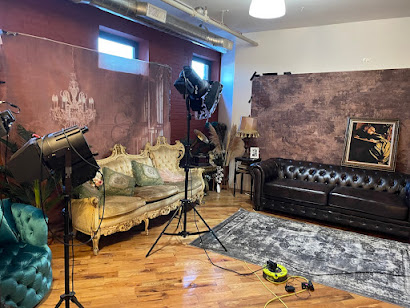
Boudoir photography cannot work well if the client feels watched in the wrong way. Privacy is not just a feature to mention on a booking page. It is the thing that makes the rest possible. The studio site repeatedly refers to a private, comfortable space and an environment where the client can relax and enjoy the experience. The studio also highlights its 1,300 square foot Dumbo location and frames the session as a unique experience with a dedicated team.
That matters because the body responds to privacy. When people feel secure, their posture changes. Their face softens. Their breathing slows. They stop scanning the room for threats or embarrassment. They become easier to photograph because they are no longer splitting their attention between the camera and self-protection.
If a boudoir studio gets privacy wrong, the confidence part becomes much harder to build. Even the best photographer cannot fully direct someone who feels exposed in the wrong way.
Feedback helps clients trust the process
Another smart detail on the site is that clients can see the direction of the shoot on a connected computer and give feedback. After the session, they are also shown an overview and then receive a same-day gallery link to choose the images they want retouched. That kind of transparency matters. It turns the shoot from something being done to the client into something the client is actively part of.
This is one of the more underrated ways to build confidence. A nervous client often has a distorted idea of how they look on camera. They may feel awkward in a pose that actually looks great. Seeing a few strong frames can change the mood of the session almost immediately. It is proof. It tells them the process is working.
Feedback also strengthens empowerment because the client is not being positioned as passive. They can say what they like. They can speak up about editing direction. One testimonial on the site specifically mentions that the photographer was open to feedback about how the photos should be edited in the style that suited the client best. That is a useful detail because it shows respect for the client’s preferences, not just the studio’s default aesthetic.
What photographers often get wrong
There are a few common mistakes that undercut confidence and empowerment in boudoir sessions.
One is assuming the client will just loosen up on their own. Sometimes they will, but usually they need guidance, pacing, and emotional clarity.
Another is overloading the room. Too many people, too much noise, too many competing opinions. That can make the client feel observed instead of supported.
Another is giving weak direction. Telling someone to be confident is not the same as helping them become confident in the moment.
Another is pushing a visual concept that does not fit the client. If the styling, posing, or wardrobe feel imposed, the client can start feeling like a prop inside the photographer’s idea instead of a person being seen clearly.
There is also the problem of overpromising what retouching can do. The site does mention polished retouching and says the photographer customizes lighting and captures beauty and emotion in camera. That balance is important. Confidence grows better when the shoot itself is handled well, not when everything is dumped onto Photoshop later.
What happens when it is done well
When boudoir is handled well, the client often leaves feeling different before they even receive the final images. That is one of the clearest patterns in the site’s own language and reviews. The brand repeatedly frames the session as something that leaves women glowing, happy, and confident. Reviews describe clients feeling transformed, better directed than expected, and more comfortable than they thought possible. The photographer is presented as someone with around 20 years of experience in editorials and fashion work, and the team is introduced as experienced beauty professionals used to helping clients look and feel their best.
That combination matters. Experience helps the photographer solve problems fast. Good styling helps the client feel more polished. Clear direction helps reduce awkwardness. Privacy reduces tension. Feedback builds trust. Put all of that together and the client has a much better chance of actually feeling the confidence the final images are supposed to show.

Final thought
Boudoir photography builds confidence and empowers clients when the experience is designed to support real people, not fantasy versions of them. That means a private environment. Clear communication. Styling that feels personal. Professional hair and makeup. Posing guidance for beginners. Space for feedback. A photographer who understands light, emotion, and pacing. The pages from Your Hollywood Portrait keep coming back to those same ideas for a reason. They are the real structure underneath the finished photos.
That is also why boudoir can be more meaningful than people expect. When it is done correctly, the camera is not just recording how someone looks. It is showing what becomes possible when they feel safe enough to stop shrinking in front of it.
Contact us:
Boudoir Photography by Your Hollywood Portrait
2 Prince Street Suite 5014, Brooklyn, NY 11201
646-209-8198


Comments
Post a Comment